4,000 Days
What almost eleven years of showing up taught me about consistency, biological age, and why Portico had to connect the whole system.
On June 25, I closed my Apple Watch Move ring for the 4,000th time.
The number made me pause. Four thousand days is almost eleven years.
The Move ring closes when you meet your daily active-calorie goal. For perspective, Apple Watch launched about 4,080 days before this milestone. I missed roughly 80 days along the way, so this is not about perfection. It is about showing up, almost every day, for a very long time.
The ring is not the point.
The consistency is.
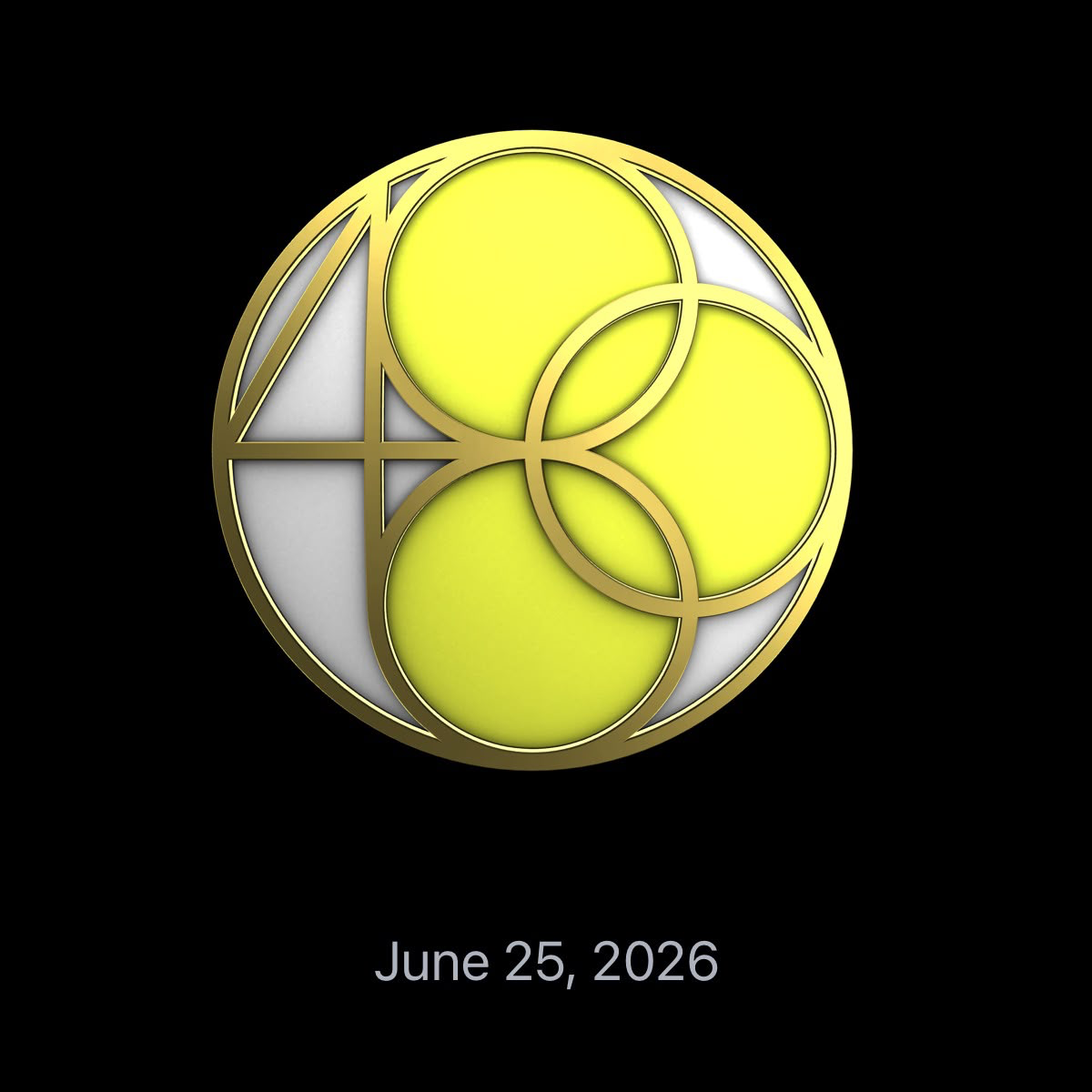
It is all about showing up, almost every day, for a very long time
One active day does not change your life. One healthy meal does not either. Going to bed on time once will not repair years of poor sleep. Five quiet minutes will not permanently regulate a nervous system.
But small choices repeated over thousands of days quietly become a structure.
That is what the milestone represented to me: not intensity, and certainly not perfection.
It represented the willingness to return the next day.
My reason for beginning was personal. My mother developed type 2 diabetes in her early fifties and died at sixty-two. Watching a slow disease get treated as a series of late events changed the way I saw health. An engineer learns that systems rarely fail without warning. The signals usually appear long before the collapse.
I wanted to understand those signals in my own body while there was still time to act on them.
When consistency began to compound
At the beginning, my biological-age estimate was about one year older than my calendar age.
I was exercising. I was improving my food and sleep. I felt as if I was doing many of the right things, but the number barely moved.
Then it began to improve.
At one point, it moved in the wrong direction when I was just a shade inconsistent.
That mattered because it made the lesson harder to misunderstand: health does not reward every good week immediately. The body is not a points system. It is a very complex system, which means adaptation can feel uneven. Some changes appear quickly; others need enough repetitions before their direction becomes visible.
Over time, the estimate moved from one year older than my calendar age to fourteen years younger—a fifteen-year change in the gap.
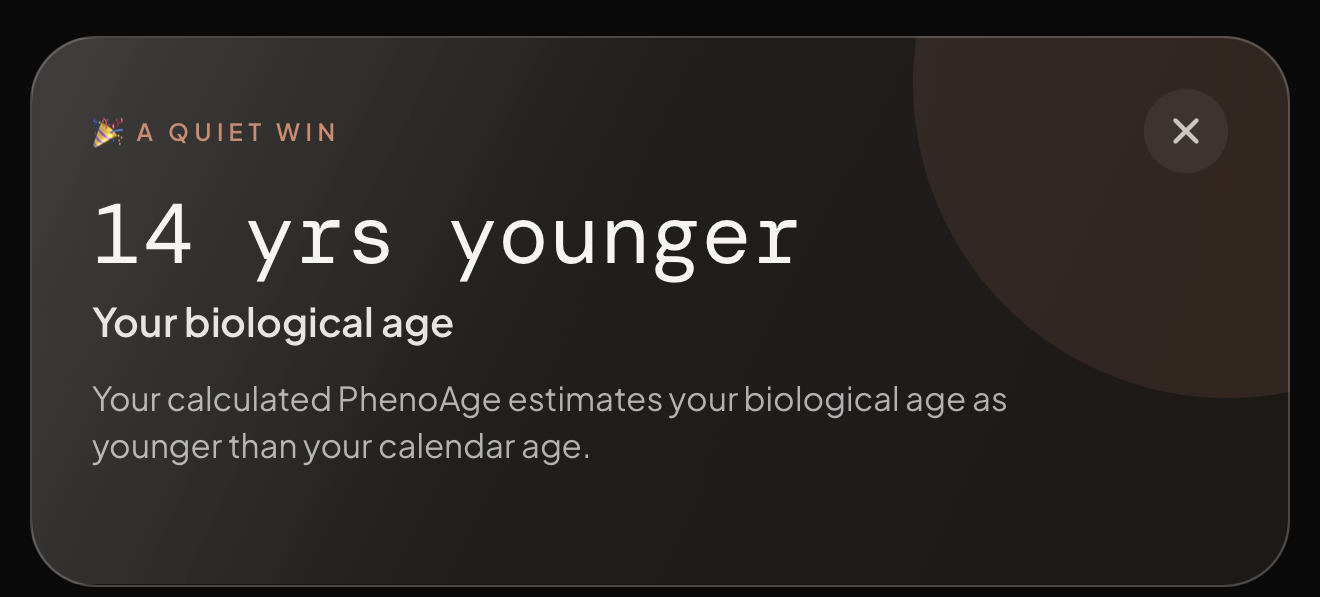
I cannot assign that change to any single habit, supplement, or routine. The ring did not cause it. The ring only made one quality visible: I kept showing up.
The biological-age result reflected something broader—four domains working together, repeatedly, over time.
- Sleep became more consistent.
- Food became more deliberate.
- Exercise became a daily signal.
- The mind received the same attention as the body.
No one domain explains the result. The compounding happened between them.
What the Move ring could not show
The Watch could tell me whether I moved enough to close a circle. It could not tell me how last night’s sleep changed today’s appetite, how food changed recovery, how training changed metabolic health, or how stress changed all three.
I used biological age as a simple composite anchor, not a score to chase. It quickly became clear that no single number could be the north star; Sleep, Food, Exercise, and Mind had to be understood together.
That missing connection became the idea behind Portico.
Health is usually presented as a checklist: sleep more, eat better, exercise, manage stress. But the body does not experience four separate checklists. It experiences one interconnected system.
Sleep is the foundation. Food and Exercise are the pillars. Mind is the roof. Signals keep the structure honest. Consistency gives the structure time to change.
Portico exists to make that direction visible—to connect what individual apps, tests, and specialists leave separate, and to help someone act before small drifts become large consequences.
Day 1, then Day 2
Four thousand can sound intimidating. It should not.
Nobody begins with a streak. Everyone begins with one day.
You do not need to reproduce my routine or chase my biological-age number. This is one person’s experience, not a universal prescription. The useful lesson is smaller and more durable:
Start wherever you are. Do something small enough to repeat. Then return tomorrow.
Day 1. Then Day 2.
Here is to the next thousand.